VSK Bharat
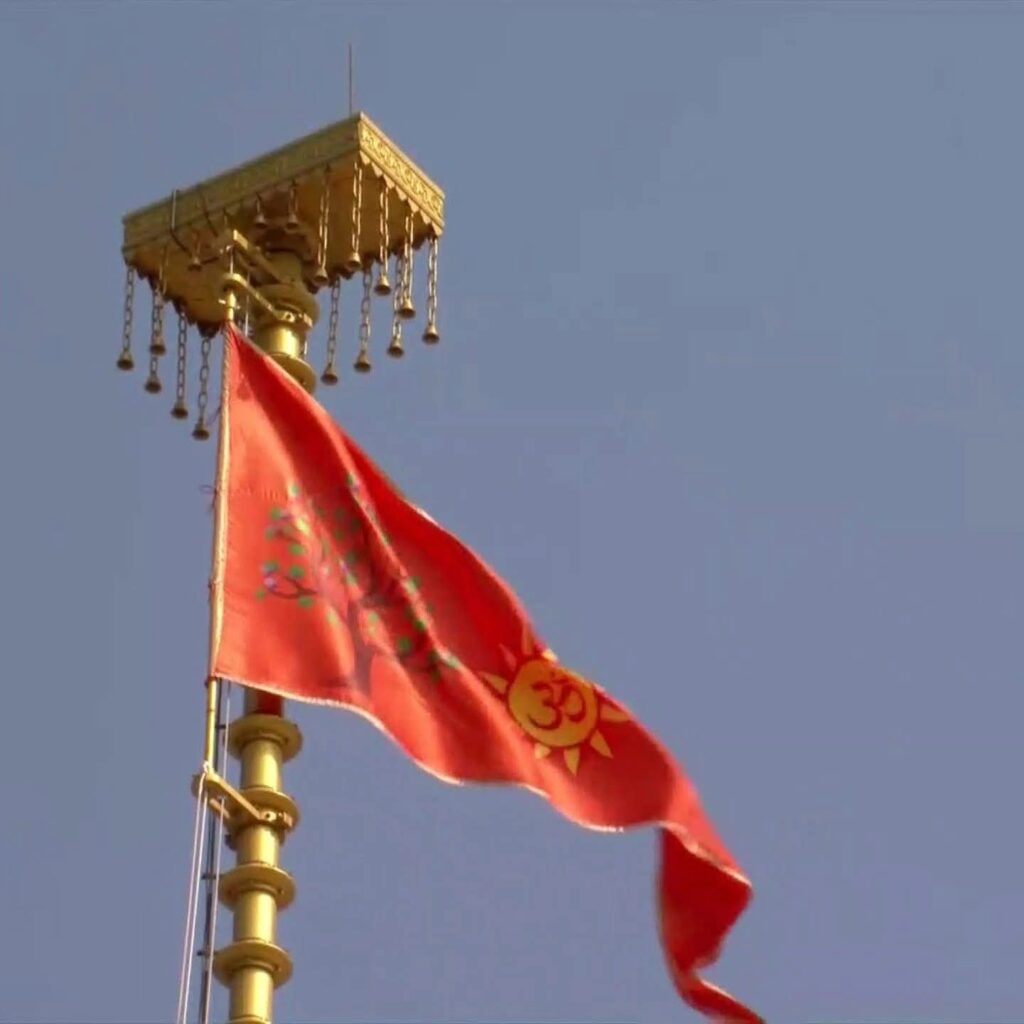
Ram Mandir Dhwajaarohan
The Dhwajaarohan at Shri Ram Janmabhoomi Mandir is not merely the raising of a flag atop a sacred shrine, it is the culmination of a civilisational journey that began millennia ago. From the earliest Itihasas, Ayodhya stands as the cradle of Maryada, where Bhagwan Ram lived the ideals that shaped Bharat’s moral compass. The saffron Dharma Dhwaja rising above the temple recalls the banners that once fluttered over ancient gurukuls, janapadas, and kingdoms where Dharma guided governance and society.
Centuries of invasions, desecrations, and foreign rule tried to suppress this civilisational memory, yet Ayodhya remained alive in the hearts of millions through lullabies, folklore, kirtans, and the collective consciousness of a resilient people. The long struggle for Ram Janmabhoomi – peaceful, determined, and rooted in faith – became a symbol of Bharat’s quest to reclaim its own cultural truth.
Today, the dhwaja rising over the reconstructed temple reflects a nation reconnecting with its historical confidence. It signifies that Bharat is no longer apologetic about its heritage but proudly draws strength from it. The Ram Mandir stands as the spiritual nucleus of a resurgent civilisation that has survived every storm and yet continues to guide humanity with the ideals of dharma, karuna, maryada and samajik samarasata.
In the 21st century, as Bharat emerges as a global voice – economically assertive, culturally self-assured, and spiritually rooted – the dhwaj over Ayodhya becomes a message to the world: a civilisation may face setbacks, but when its foundational values remain alive in its people, revival is inevitable. The world today looks to Bharat for leadership in peace, ecology, yoga, digital innovation, and moral diplomacy, and the ethos of “Ram Rajya” – justice, duty, fairness, harmony – finds new relevance.